We collaborate with research institutions and industry partners on publicly funded ctDNA research.
Research Roots
Rooted in research
LIQOMICS grew out of cancer research, and our diagnostics are the result of that
work. We are actively engaged in publicly funded projects and open to new research
collaborations.
Ovarian cancer is often diagnosed at an advanced stage. In the collaborative
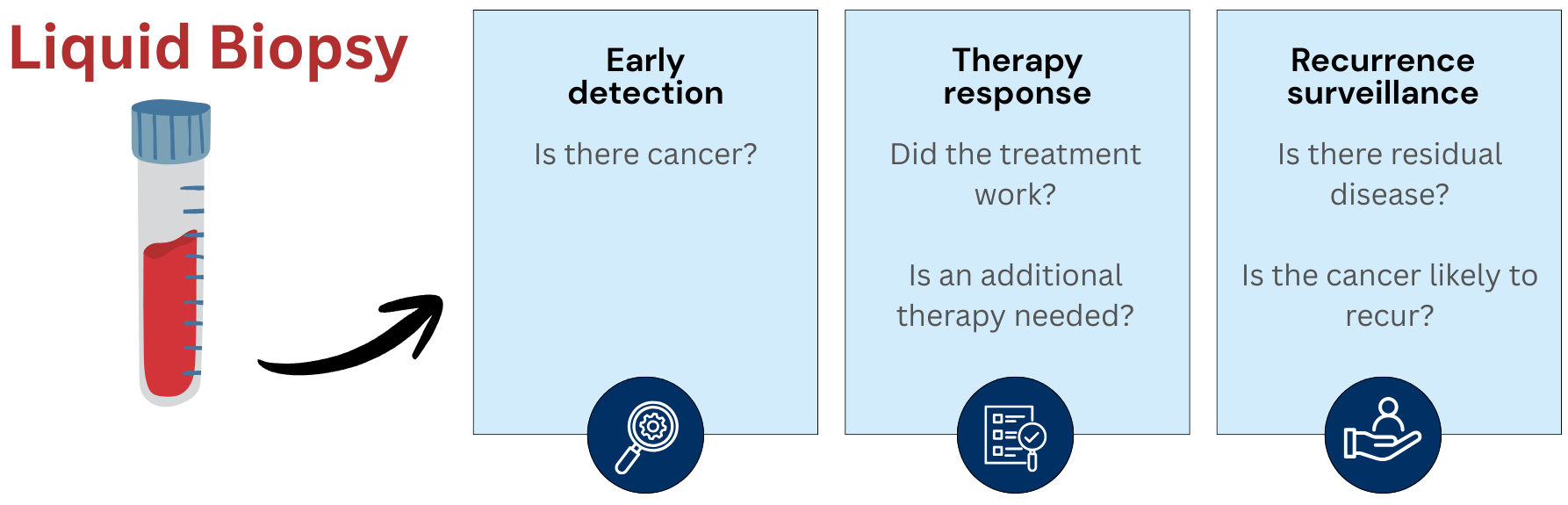
project OVARSENSE, we aim to develop a test in which a simple blood sample (liquid biopsy) is sufficient to
detect ovarian cancer and potential recurrences during and after therapy (minimal residual disease, MRD) at
an earlier stage, thereby enabling more targeted treatment of ovarian cancer.
Project Title:
Development of an ultrasensitive, non-invasive method for the early detection
and determination of minimal residual disease (MRD) in ovarian cancer using circulating tumor DNA (ctDNA)
in liquid biopsies.
Project Goal
A test that can both determine minimal residual disease, as well as being used
for the early detection of ovarian cancer is under development. This minimally invasive method reduces
the burden on patients and offers significantly higher accuracy than traditional
methods.
Approach
The goal is to enable precise and personalized diagnostics through the
analysis of circulating tumor DNA (ctDNA) using liquid biopsies and next-generation sequencing (NGS).
This innovative technology allows for the early detection of recurrences and supports personalized
therapy decisions.
FOCuS
Small Cell Lung Cancer
Small cell lung cancer (SCLC) is a type of tumor with an extremely low survival
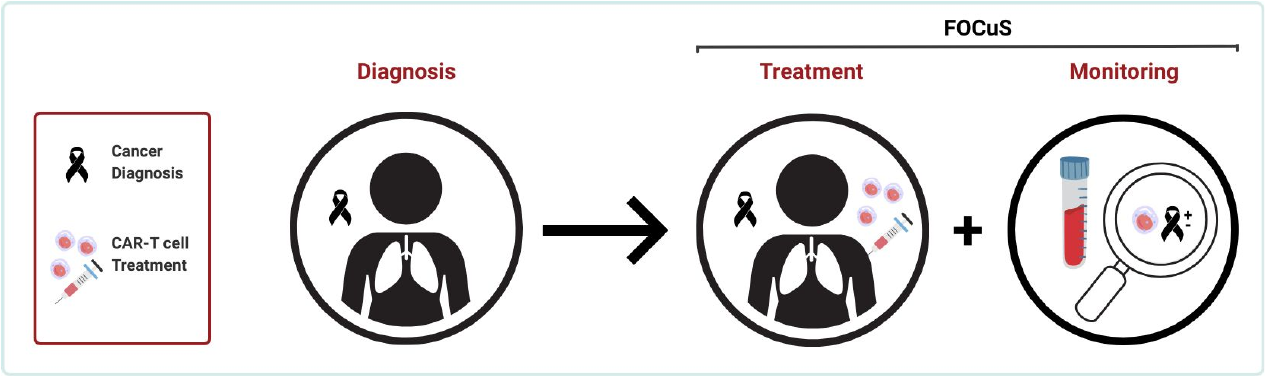
rate. In our collaborative project FOCuS, we aim to develop a new form of immune cell therapy together with
a companion cancer test (liquid biopsy). The goal is to enable earlier, more targeted, and more effective
treatment of SCLC through the combined development of therapy and diagnostic testing.
Fraunhofer-Gesellschaft zur Förderung der angewandten Forschung e.V.Munich, Germany
Fraunhofer Institut für Zelltherapie und Immunologie, IZILeipzig, Germany
Project duration:
January 2026 – ongoing
Project ID: IN-GE-3-001b
Project title:
FOCuS - Flüssigbiopsien und Optimierte CRISPR knock-in CAR T Zellen zur Behandlung des SCLC
Project Objective
The aim of the project is to develop a CAR T-cell therapy for the treatment of
small cell lung cancer (SCLC).
Approach
We use non-viral genome editing with CRISPR/Cas9 for the targeted generation of
optimized CKI CAR T cells. In addition, we are developing a liquid biopsy-based testing system that
enables longitudinal molecular characterization of SCLC during therapy, including MRD monitoring and
subtyping.
Research Collaboration
Have a project in mind?
Tell us about your research question or collaboration proposal. Our scientific
team reviews it and responds within 48 hours.