ctDNA-Based MRD Testing
Precise MRD Detection. Confident Decisions During Treatment and Surveillance.
LymphoVista delivers ctDNA results at the milestones that shape your clinical decisions: during treatment, after treatment, and during follow-up. Clinically validated for lymphoma.
Validated In-House IVD Test
Presented at ASH 2024 · EHA 2024

Two Specialized Panels
LymphoVista offers disease-specific ctDNA assays optimized for B-cell lymphomas and Hodgkin lymphoma respectively. Select a variant to view its specifications and clinical evidence.
LymphoVista
For B-Cell Lymphomas
Clinical validation · relapsed/refractory DLBCL
18-month OS
18-month PFS
HR (Hazard Ratio): the relative risk of the event between groups. Higher means greater risk for the MRD-positive group. p: the probability this difference occurred by chance. The smaller, the stronger the evidence.
6.69 × 10⁻⁶
Limit of Detection (LoD)
For lymphoma MRD
>99%
Variant Detection Specificity
Genotyping / variant detection
10–15
Business Days
Turnaround time for an interpreted report
Internal validation. Data on file.
Four Decisions Enabled
Clinical Evidence
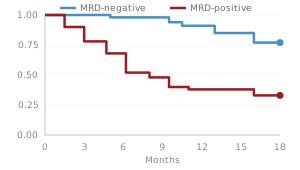
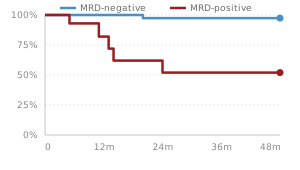
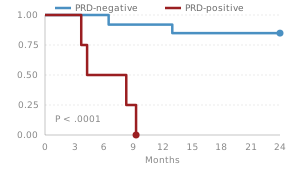
Want all three indications in one document? Download the LymphoVista Service Profile (PDF).
Three steps. Precise results. Confident decisions.
Characterize
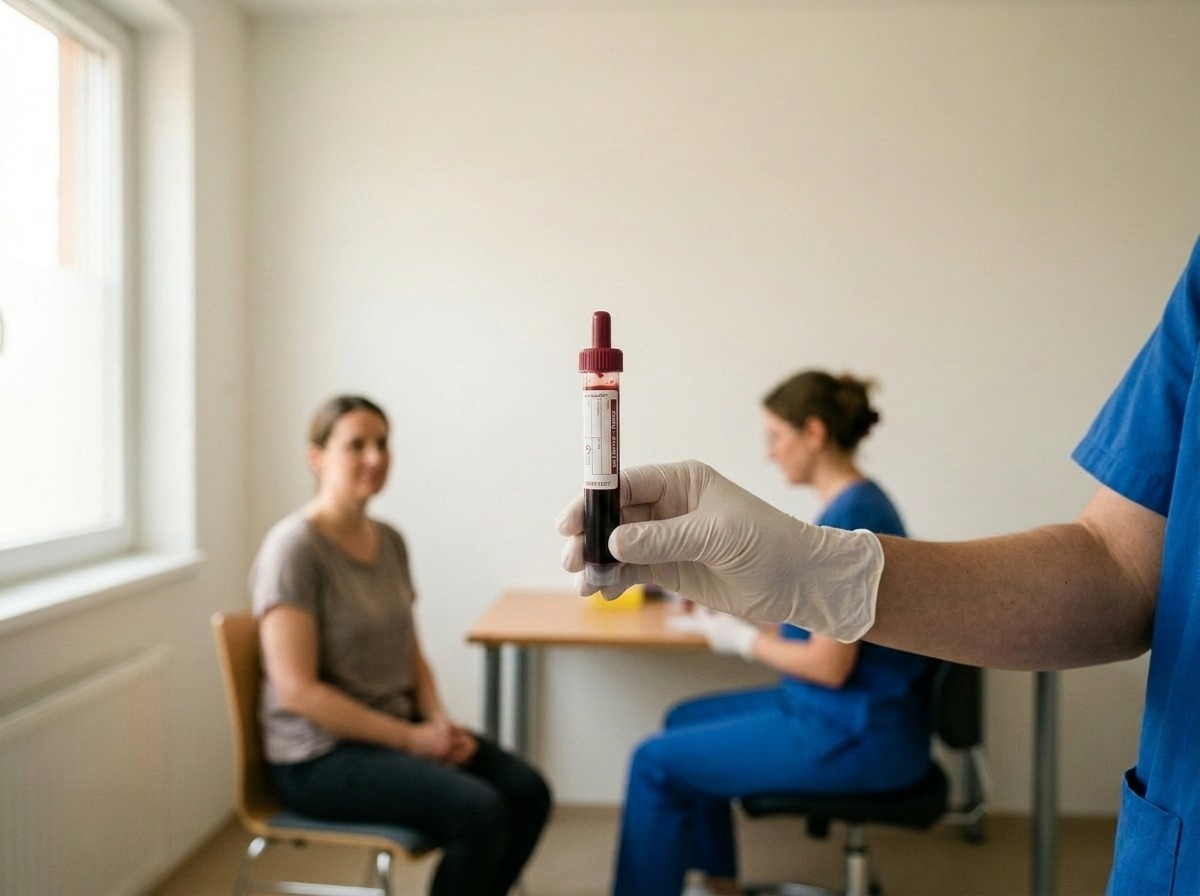
Draw 20 ml of peripheral blood to build a patient-specific mutation profile. No specialized lab equipment or added training required.
Monitor
Serial ctDNA testing at each treatment milestone tracks disease burden, often months before imaging can detect a relapse.
Decide
Our results let you make confident decisions about the next steps in treatment or follow-up care.



Built by a physician, for patients and colleagues
"Lymphoma patients shouldn't have to wait for the next scan to know if their therapy is working. ctDNA gives us that signal in real time. That's what we're building at LIQOMICS."
Precise MRD in lymphoma. Confident decisions.
Request a collection kit or speak directly with a LIQOMICS specialist to discuss your case.